


Community Buildings and Structures
Memory became part of everyday life
Memorial bridges, schools, theaters, stadiums, and civic spaces turned ordinary places into reminders of sacrifice and remembrance.
Crossing remembrance every day - Aurora, Illinois
Dedicated on Armistice Day in 1931, the New York Street Memorial Bridge transformed an ordinary act – crossing a bridge – into a repeated encounter with remembrance. Sculptural groups titled Memory and Victory framed movement through the city with symbols of sacrifice, mourning, and peace.
Attribution: enjoyaurora.com

Stonehenge Memorial - Maryhill, Washington
This full-scale replica of England’s Stonehenge was dedicated in July 1918 by Sam Hill, founder of nearby Maryhill Museum of Art, to honor service members of Klickitat County, Washington who gave their lives in the Great War. It was completed in 1929. Hill believed the original Stonehenge had been a site of human sacrifice and designed this replica to remind visitors of the “incredible folly” of war. The inscription reads,
To the memory of the soldiers and sailors of Klickitat County who gave their lives in defense of their country. This monument is erected in hope that others inspired by the example of their valor and their heroism may share in that love of liberty and burn with that fire of patriotism which death alone can quench.
Attribution: MagicalT at Wikimedia Commons

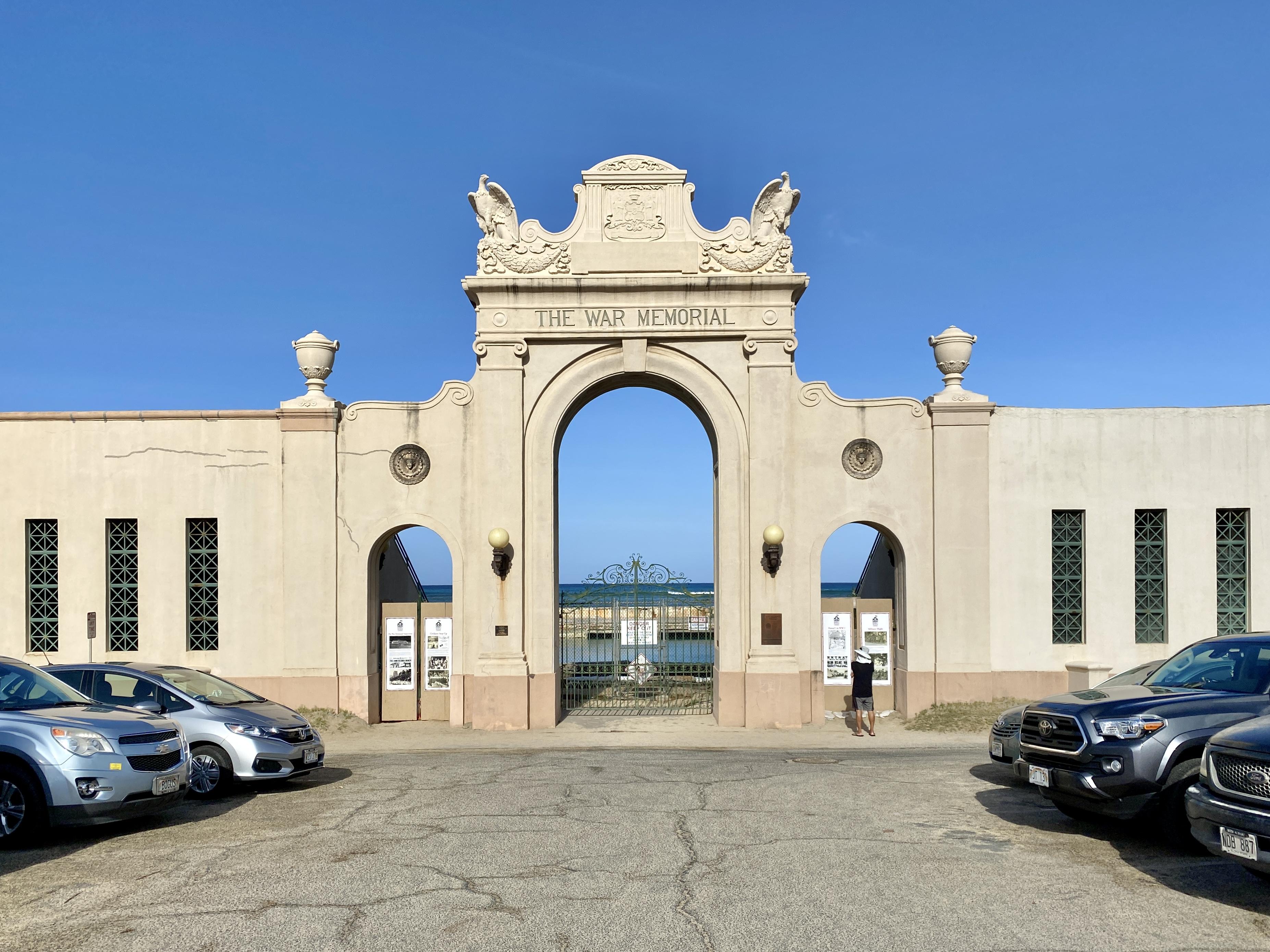
Waikiki Natatorium War Memorial - Honolulu, Hawai’i
Dedicated in 1919 and completed in 1927, the Waikiki Natatorium was conceived as a living memorial to the more than 10,000 men and women from the Territory of Hawaii who served in World War I. The site features a grand archway with eagles flanking each side and a saltwater swimming pool open to the sea. Located on the island of O’ahu, Hawai’i, it has been closed to the public since the 1980s, with preservation efforts underway.
Attribution: Warren LeMay
War Memorial Opera House - San Francisco, California
Built entirely from community donations around the Great Depression, the War Memorial Opera House was dedicated on Oct. 15, 1932 to honor San Franciscans who served in World War I. It was the first opera house constructed solely through public fundraising in the United States, standing as both a cultural and civic monument.
Attribution: Sanfranman59 at Wikimedia Commons

- Slide 1 of 2

Attribution: KU Memorial Unions

Dedicated on Armistice Day (Nov. 11, 1922), the University of Kansas Memorial Stadium was built to honor the 129 students and alumni who died in World War I. Funded by students, faculty, and fans, it became the first of several war memorials on campus and – whil...
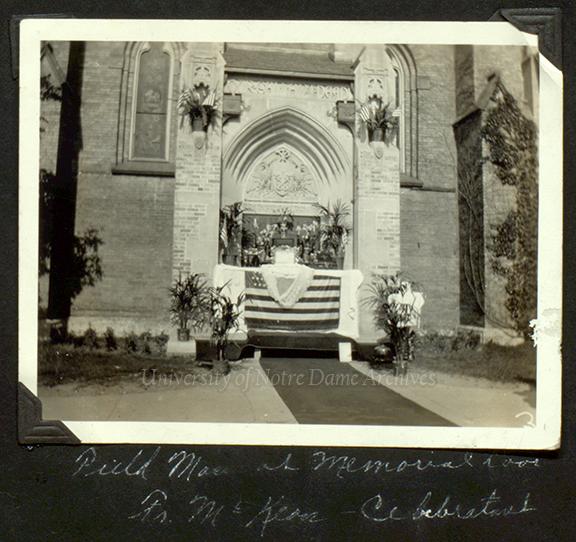
Entrance to the Basilica of the Sacred Heart - South Bend, Indiana
Many faith communities sought ways to honor those who sacrificed during the Great War, creating stained glass windows, memorial plaques, chapels, and sacred entryways. At the University of Notre Dame, the community built a new entrance to the Basilica of the Sacred Heart as a lasting tribute. Each person who passes through its doors is reminded of the lives lost and the enduring call to faith, service, and remembrance.
The stone lintel reads, “In Glory Everlasting!” Above it, the words “Our Fallen Dead” appear, and below, two eagles bear a ribbon inscribed, “God, Country, Notre Dame”.
Attribution: University of Notre Dame Archives

.JPG)