Graves and Monuments
A place to return
Some graves were improvised, marked by whatever was nearby. Some became permanent – an ocean away, tended by a nation. Some came home. Each became a sacred space.
Acts of care between one battle and the next.
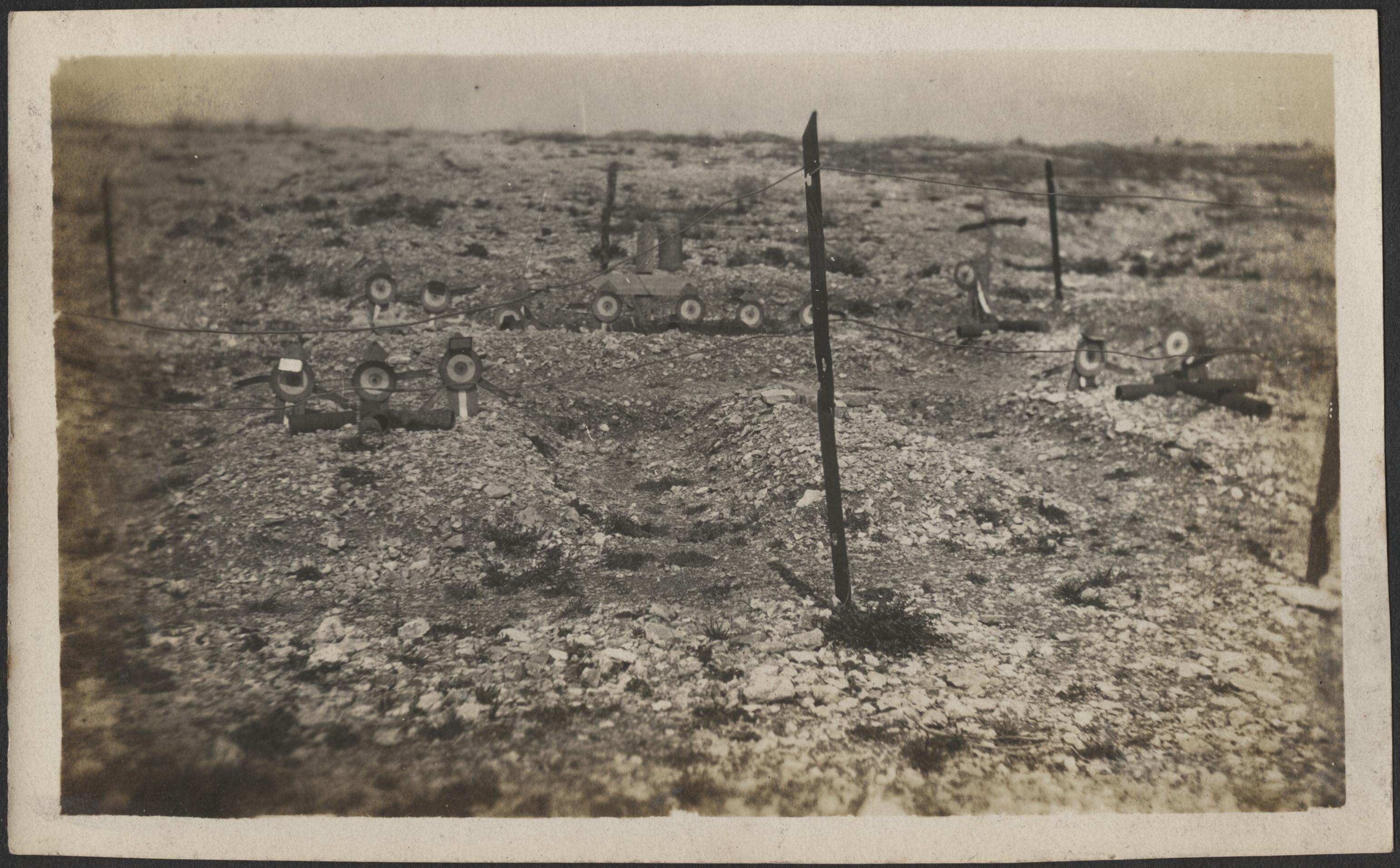
Soldiers built temporary cemeteries themselves – gravel mounds, wooden crosses, rough fences. Careful, deliberate dignities, doing what they could with what they had. After the war, American families chose whether their loved ones would be returned home or reburied in permanent American cemeteries overseas.
The location of this cemetery is unknown, but the photo – taken by an engineer in the American Expeditionary Forces (AEF) during the war – shows a collection of gravel-covered graves marked with crosses with attached roundels, and surrounded by a simple fence. Cemeteries like these were created by soldiers, for soldiers, to ensure temporary commemoration and memorialization when it was not possible to provide them with a permanent grave site due to the conflict.
After the war, families were given a choice of repatriation or permanent overseas burial. For those who elected for overseas burials, their loved one’s remains were moved from these temporary cemeteries to one of the eight permanent cemeteries established by the Graves Registration Service and designed by the American Battle Monuments Commission.
Attribution: Object ID: 2004.131jj
Standing beside memory.
Pilgrimages to overseas graves transformed distant burial sites into deeply personal spaces of mourning and reflection.
Estella Margaret Kendall at the grave of her son, First Sergeant Harry N. Kendall, Meuse-Argonne American Cemetery, 1933. The Gold Star Pilgrimages were funded by the U.S. government and allowed family members like Estella and many others to visit overseas graves of their loved ones and take photographs – making the grave present for them when it would otherwise remain an ocean away.
Attribution: Object ID: 2000.30.58

Carved from the ground they stood on.
Chalk, wood, and stone from the battlefield itself were shaped into markers and memorials, binding memory to the landscape of war.
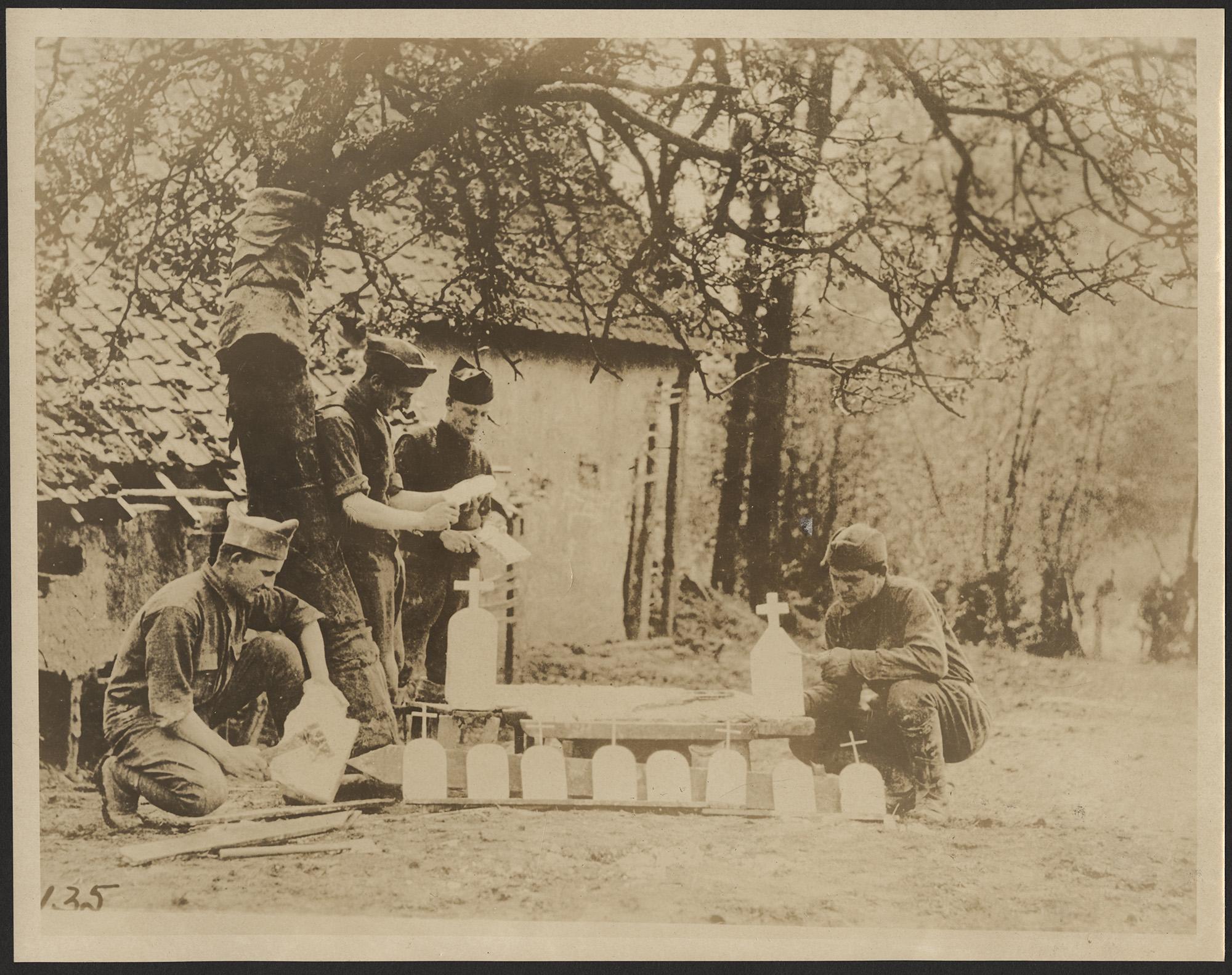
In parts of the Western Front, particularly in France, the earth itself was made of soft chalk stone. In this photograph, United States Marines carve grave markers from the landscape around them, transforming the ground of war into places and pieces of remembrance.