


Keepsakes
What remains
Small personal objects often became the most meaningful memorials. Their physical presence preserved emotional connections long after the war ended.
- Slide 1 of 2

Holding onto sacred ground. Gold Star families sometimes carried soil from overseas gravesites back across the Atlantic, preserving physical connections to loved ones buried far away. Bags of French soil were given to grieving Gold Star families during their pil...

A letter was provided alongside the bag: Paris, Summer 1933 Dear Madam, We thought that you might like to take home with you this little memorial present, from your pious pilgrimage to France. This little sack is made with our united flags, and it is filled with...
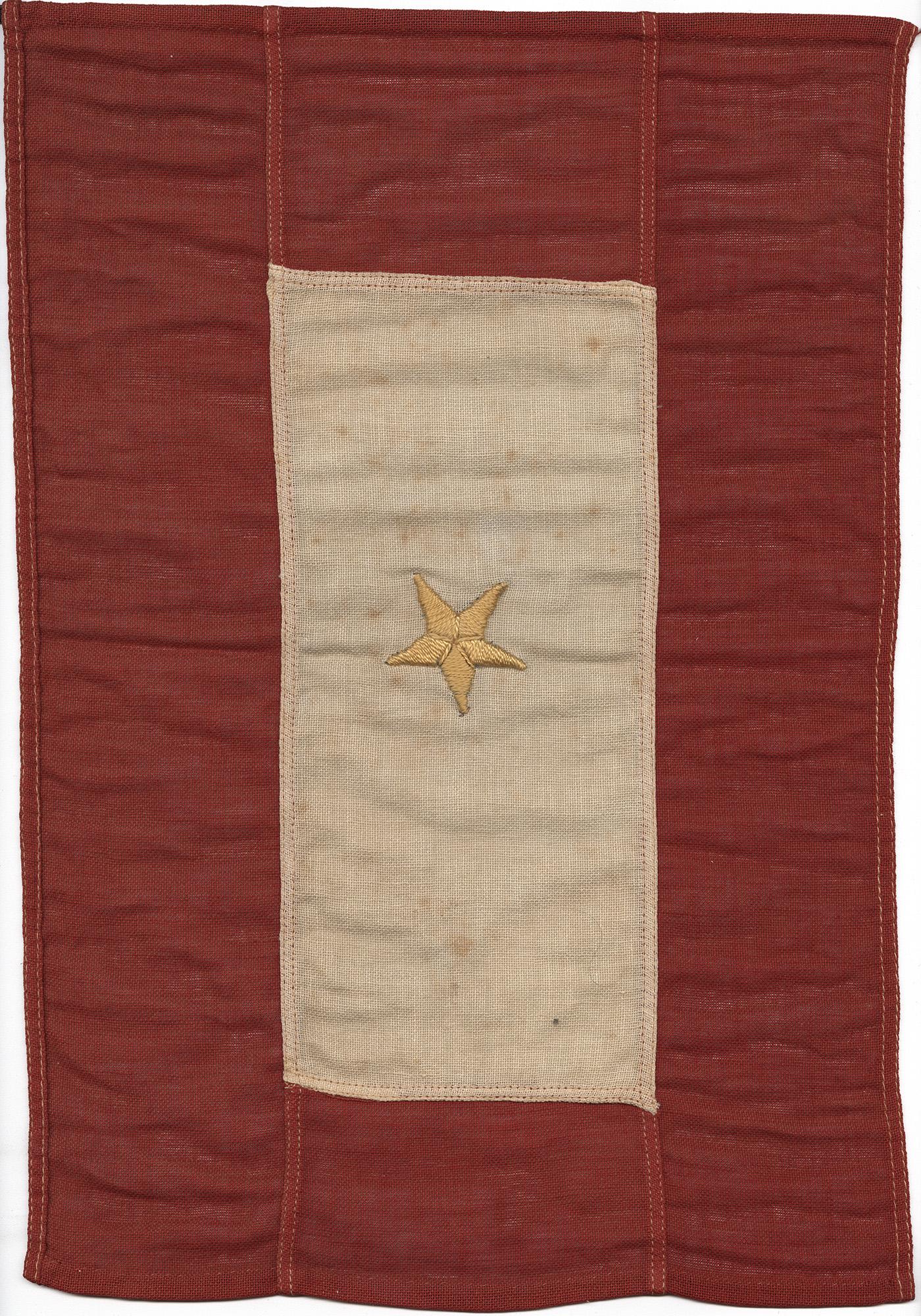
A single stitch changes everything.
A blue star represented someone serving in the military. A gold star meant they had died. Imagine walking past this home during World War I. What might this hand-sewn flag have communicated to the community?
This hand-embroidered Gold Star flag began as a Blue Star service flag, created to honor a family member serving in World War I. When that loved one died, a gold star was stitched over the blue – turning a symbol of pride into one of sacrifice and remembrance. Each handmade flag reflected personal devotion and the symbol, now officially adopted by the Department of Defense, is still used by American families today.
- Slide 1 of 7

What remains in someone’s hand. Pressed flowers, handwritten notes, and worn pages transformed this small Testament into both personal keepsake and family memorial. This pocket New Testament belonged to Private Charley Eric Walther and was found in his hand afte...

Walther’s father inscribed its pages to memorialize his son’s story: Private Charles E Walther Killed in action Oct. 1, 1918 in the Argonne France while fighting for the Stars and strips. [sic] May this Testament [sic] be kept sacred through the future generatio...


