


Music
When you don’t have the right words
Music helped communities mourn together after World War I. Sung in homes, churches, schools, and public gatherings, these songs transformed grief into shared ritual – carrying memory through melody, performance, and collective remembrance.
Grief became ceremony.
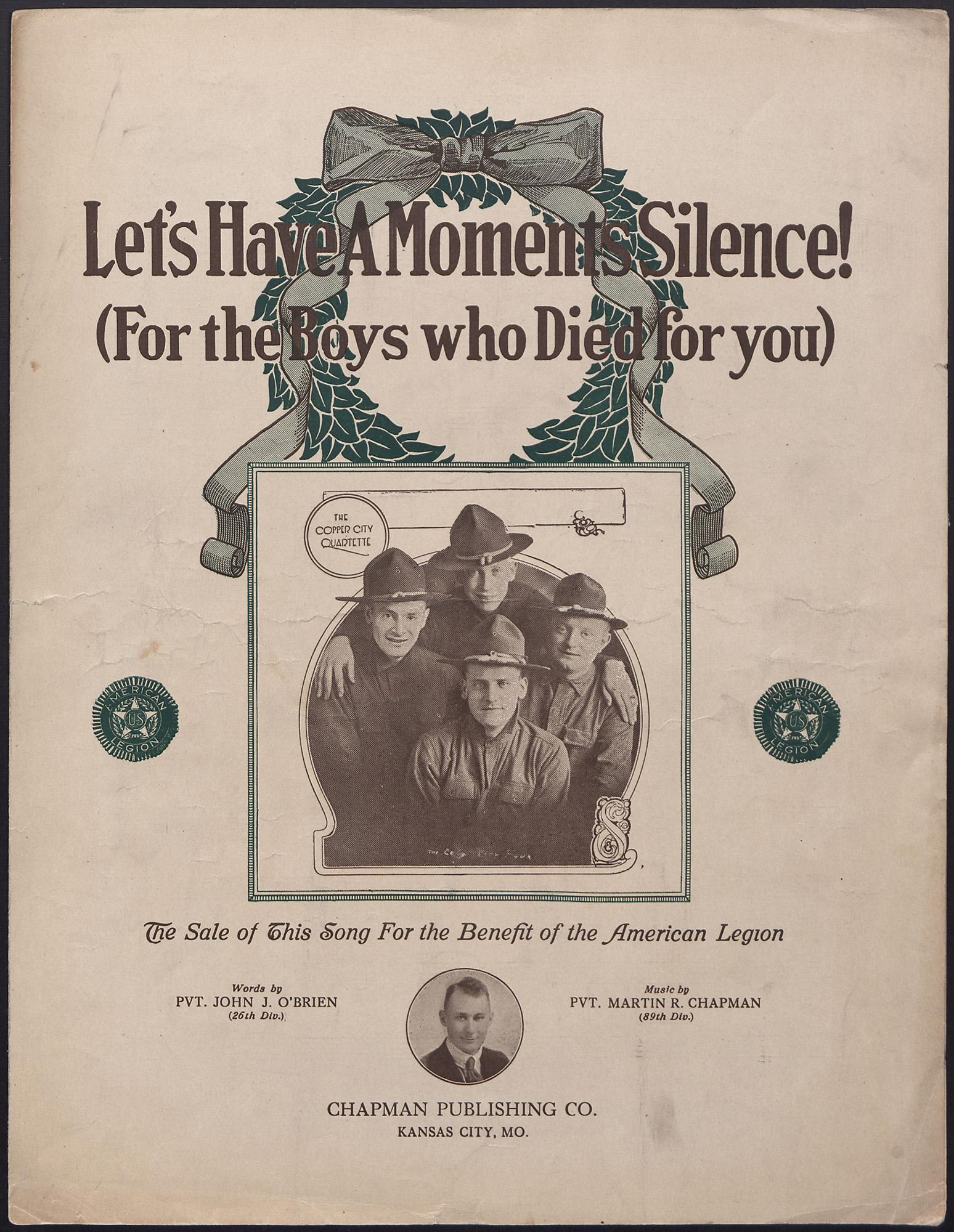
Irony aside, this sheet music published after the war encouraged Americans to pause collectively in remembrance.
Written to honor the fallen, “Let’s Have a Moment’s Silence! (For the Boys Who Died for You)” reminded listeners that peace came through sacrifice. Its cover featured Doughboys and promoted proceeds for the American Legion, urging Americans to pause each Remembrance Day.
Lyrics:
Dusk and the stars are gleaming, darkness and all is still, here in the land of freedom sorrow on every hill; Some child has lost a father, a mother has lost a son, so just let us pray for a moment each day, for those who had to pay.
Chorus
Let’s have a moments silence, let’s say a pray’r or two, let’s give a moment of our time for the boys who fought for you; let’s have a moments sorrow, let’s pray because it’s thru, let’s have a moments silence, for the boys who died for you, you
Back to the land of freedom, they have returned again, welcomed at every station, welcomed back home again; peace, and the word is happy, but still we must say a pray’r, for where e’re you roam in many a home, you’ll find a vacant chair.
Chorus repeats
Attribution: Object ID: 1982.122.78
Memory became legend
Songs like “A Story Carved in Stone” transformed fallen soldiers into heroic figures whose stories could live on through performance, repetitions, and shared memory.
Lyrics:
Somewhere in sunny France there is a statue, with the right hand pointing to the sky. And to the passerby it tells a story, of how a soldier came to die.
Chorus
He was the bravest hero ever known. Alas! He perished in the night alone; but in the marble hand that points to Heaven, there is a story carved in the stone.
There in the cold, gray dawn his comrades found him, but his brave young heart had ceased to beat. And in his frozen hand he held the message, that saved his army from defeat.
Chorus repeats
Attribution: Object ID: 2021.185.2

Celebration and sorrow existed together.
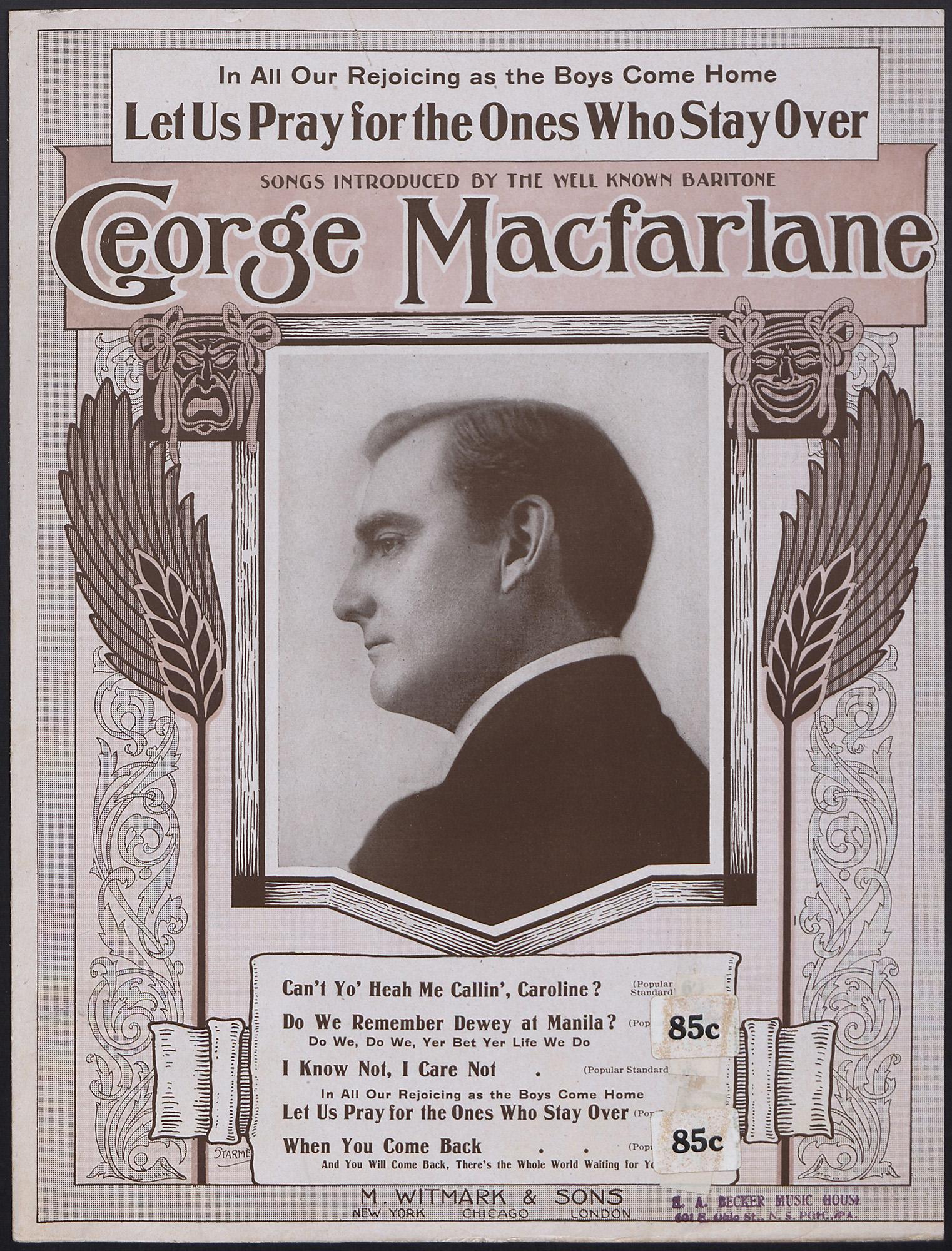
Even as communities welcomed soldiers home, songs like “In All Our Rejoicing as the Boys Come Home” reminded Americans that many families would never experience reunion.
Lyrics:
What a joyous feeling there is everywhere. What a thankful spirit there is in the air; We’ve prayed for victory but not in vain, for now at last we’ll see our boys again. Ev’ry laddie who returns from o’er the sea, will be greeted as a hero ought to be. Our welcome will reveal the gratitude we feel, but don’t forget the price of victory!
Refrain
So in all our rejoicing as the boys come home, let us pray for the ones who stay over; the sacrifice they made can never be repaid for you and me so valiantly they faced death unafraid. They are sleeping over there and won’t be here to share the welcome that their comrades will find ev’rywhere; so in all our rejoicing as the boys come home, let us pray for the ones who stay over, er.
Where’s a smile for ev’ry tear that has been shed. Since the vict’ry there is joyousness instead, how proud we are of those who faced the foe, and as they come back home we’ll let them know that they’ve made us just as happy as can be, and they will be happy, too, if they can see. The uniform they wear brings forth a fervent prayer for those who gave their lives so loyally.
Refrain repeats
Attribution: Object ID: 2005.132.31
The poppy became remembrance
After World War I, poppies became international symbols of memory and loss. Songs like “When the Poppies Bloom Again” carried that symbolism into homes and performances around the world. Using the poppy – a global symbol of remembrance – this love song mourns those lost to war.
Lyrics:
The Flanders battlefields have known the plough. The corn is waving and it’s peaceful now, but love undying still keeps me sighing, my heart is crying for you alone;
Chorus
When the poppies bloom again, I’ll remember you. There beside the River Seine where we kissed adieu. When you told me not to cry, held my tenderly but that kiss was our goodbye, you were gone from me. My lonely foot steps stray, where you must ever stay. I place a sweet bouquet. My token of love, darling, till we meet again I’ll ever be true, when the poppies bloom again, I’ll remember you, you.
I live in golden dreams of memory. When love was everything to you and me. I still remember love’s glowing ember. ‘Twas in December long, long ago;
Chorus repeats
Attribution: Object ID: 1989.34.2

A symbol changed everything.
Blue Star service flags represented loved ones serving in the military. Gold stars marked those who would never return. Songs like “When the Little Blue Star in the Window Has Turned to Gold” transformed that change into shared public mourning.
Lyrics:
A boy bravely fights for his country, a fond mother kneels down in prey’r; He’s fighting foul wrong as he forgos a long, while for him she prays God’s tend’rest care. There’s a little blue star in the window, and to her it’s a treasure untold, but she watches afraid, for she fears it may fade, that its color might change into gold.
Refrain
What star is that high in the heaves, that shines with strong, steady light? ‘Tis the soul of someone, his duty well done, and all for his country and right. Another name written in glory. With other great heroes enrolled, when the little blue star in the window has turned to gold. What gold.
A boy bravely died for his country, for honor, for justice and right; what more could he do for the Red, White and Blue that was threatened by tyranny’s might? But no mother can claim all the sorrow, nor the pride when his story is told. He belongs to us all, not in vain did he fall, or the little blue star turn to gold.
Refrain repeats
Attribution: Object ID: 1983.19.16
