Soldier as Symbol
Statues transformed individual servicemembers into recognizable public symbols of sacrifice and remembrance.
Spirit of the American Doughboy
Sculptor Ernest Moore Viquesney designed and produced more than one hundred “Spirit of the American Doughboy” statues during the 1920s and 1930s. Made affordable through mass production, his design became one of the most recognizable World War I memorials in the United States. While Viquesney claimed to have sold over 300, 163 are known to survive today.
The statue shows a U.S. soldier charging forward through No Man’s Land, grenade raised in one hand and rifle in the other. Tree stumps and barbed wire at his feet complete the scene of battle and sacrifice.
Attribution: Threeblur0 at Wikimedia Commons

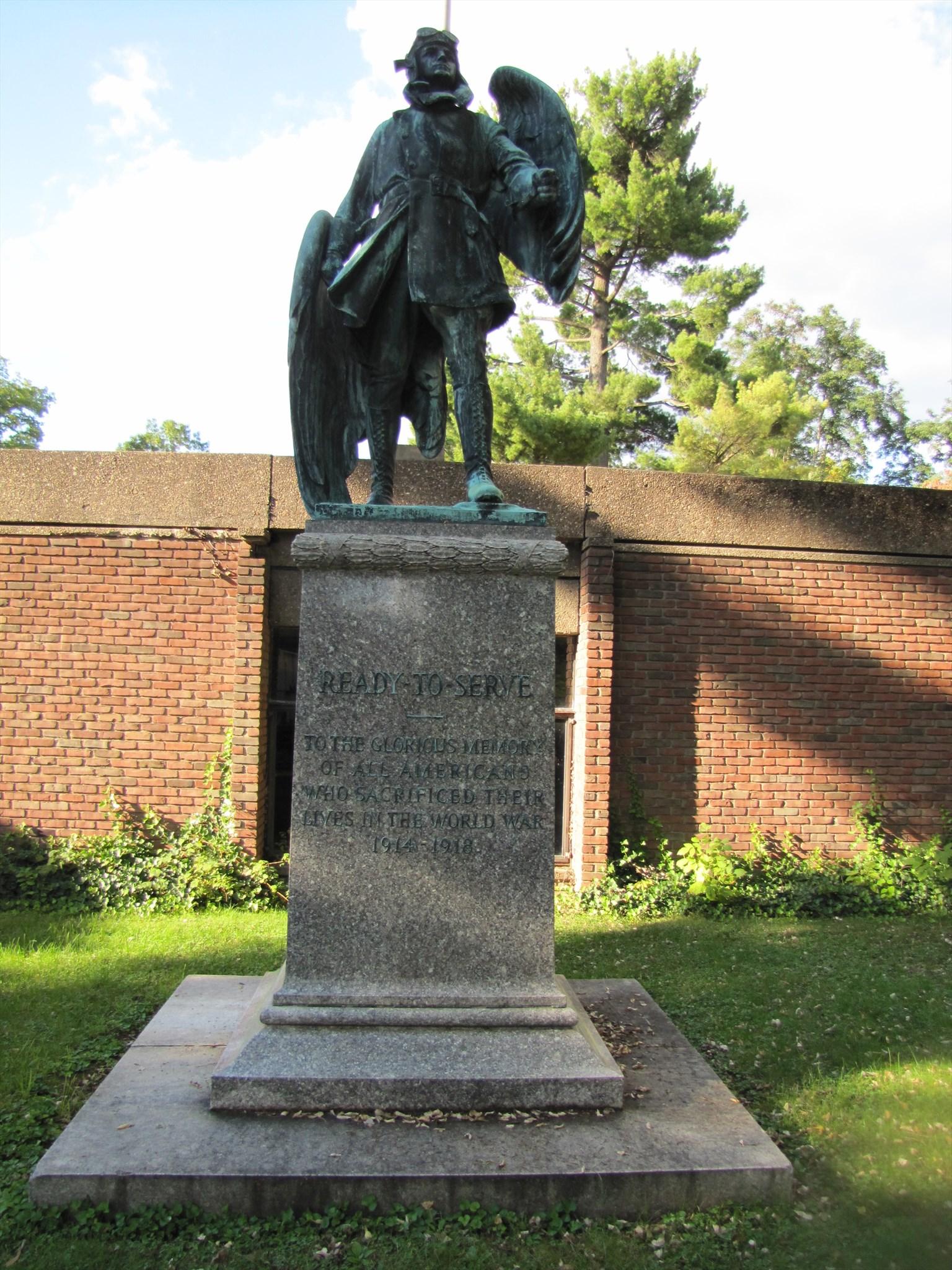
The Aviator - Wheeling, West Virginia
“The Aviator” statue stands on the grounds at The Linsly School in Wheeling, West Virginia. Created by sculptor Augustus Lukeman and dedicated in 1925, it was commissioned by Sallie Maxwell Bennett in memory of her son, American pilot Louis Bennett, Jr., who was killed in action in France while serving in the Royal Air Force.
While first a tribute to her son, the statue also honors all Americans who served and sacrificed in the Great War. Its inscription reads:
Ready To Serve - To the glorious memory of all Americans who sacrificed their lives in the World War, 1914-1918
The bronze figure depicts a pilot gazing upward, one arm outstretched with large wings on his back.
Attribution: Christopher Nay at worldwar1centennial.org
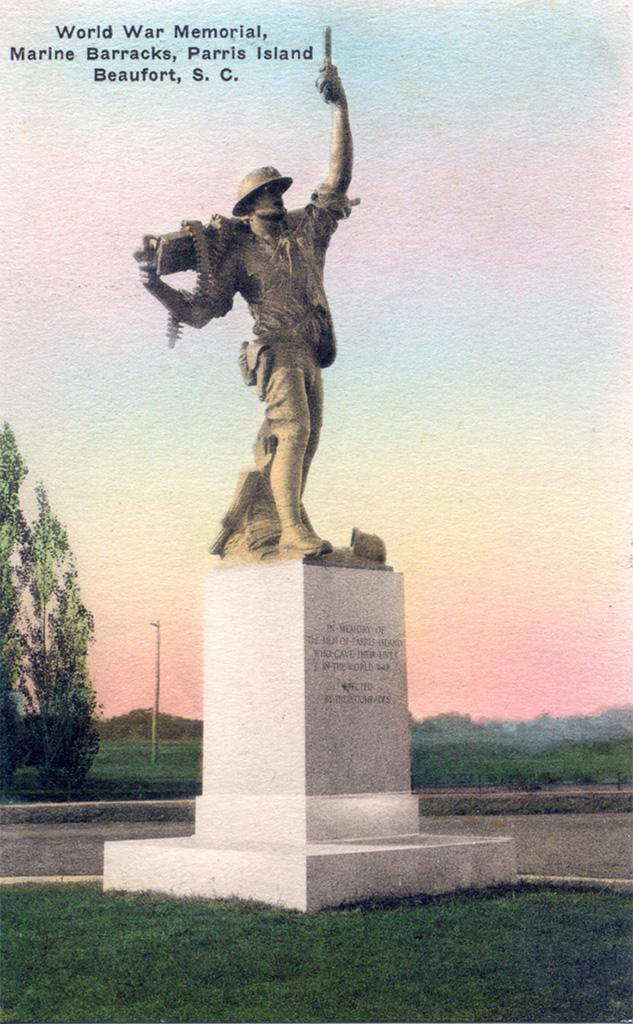
Monument to US Marines - Parris Island, South Carolina
Nicknamed “Iron Mike,” this statue was commissioned by the U.S. Marine Corps and funded by donations from Marines serving during the Great War. Sculpted by Robert Ingersoll Aitken – also responsible for the Guardian Spirits atop the National WWI Museum and Memorial’s Liberty Memorial Tower – it was dedicated in July 1914.
Standing on Parris Island Marine Corps Recruit Depot where recruits can see the memorial easily, the bronze figure carries a Maxim machine gun on one shoulder and a M1911 pistol in his left hand, symbolizing courage and readiness. The plaque below the statue reads,
In memory of the men of Parris Island who gave their lives in the World War, erected by their comrades.
Attribution: mcrdpi.marines.mil
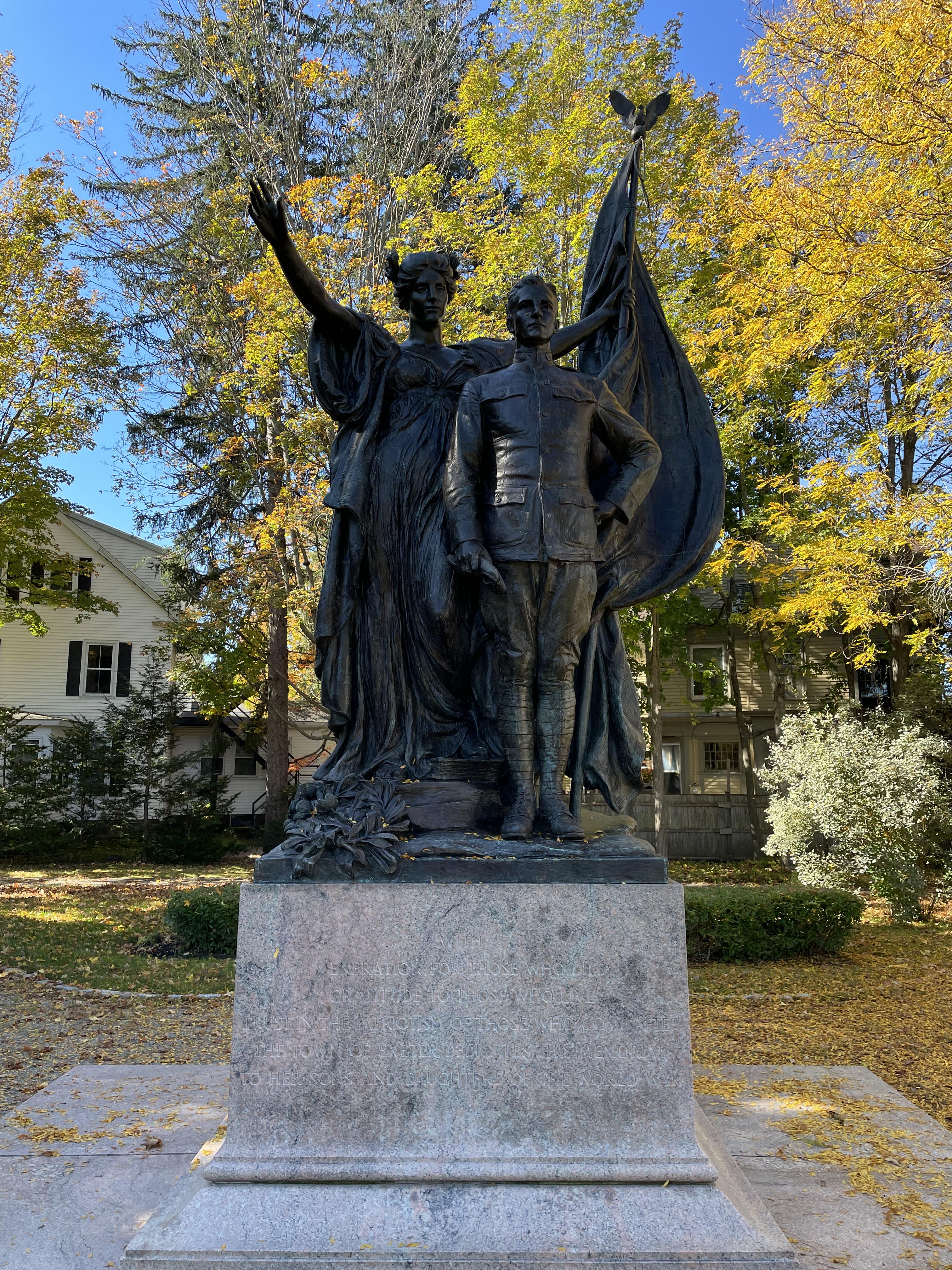
Gale Park War Memorial - Exeter, New Hampshire
Also known as the “Exeter War Memorial,” this statue stands in Gale Park in Exeter, New Hampshire. Dedicated on July 4, 1922, it was created by sculptor Daniel Chester French, best known for the Lincoln Memorial in Washington, D.C.
This memorial depicts a Doughboy holding his cap beside a woman raising the American flag. A wreath rests at their feet, symbolizing honor and remembrance. The inscription reads,
With veneration for those who died, gratitude to show who live, trust in the patriotism of those who come after, the town of Exeter dedicates this memorial to her sons and daughters of the World War.
Attribution: AntiCompositeNumber at Wikimedia Commons